


Ecommerce SEO services help your store show up in Google when shoppers search for products you sell. They cover keyword research, on-page fixes, technical health, content, and links that build trust over time.
If you rely only on paid ads, traffic stops the moment you stop paying. Ecommerce SEO services build a steadier base. The work takes months, but the rankings and content keep working after the first push.
What Ecommerce SEO Services Include
Ecommerce SEO services are the ongoing tasks that improve how your store ranks and converts in organic search. A good provider does not just add keywords to pages. They fix the structure, content, and authority that decide whether Google trusts your store.
Most plans cover five core areas: keyword research, on-page SEO, technical SEO, content, and link building. Larger plans may add local SEO, international SEO, or conversion support.
The right mix depends on your store size and stage. A new store needs a clean setup and core pages first. An established store usually needs deeper content and authority work to pass stronger competitors.
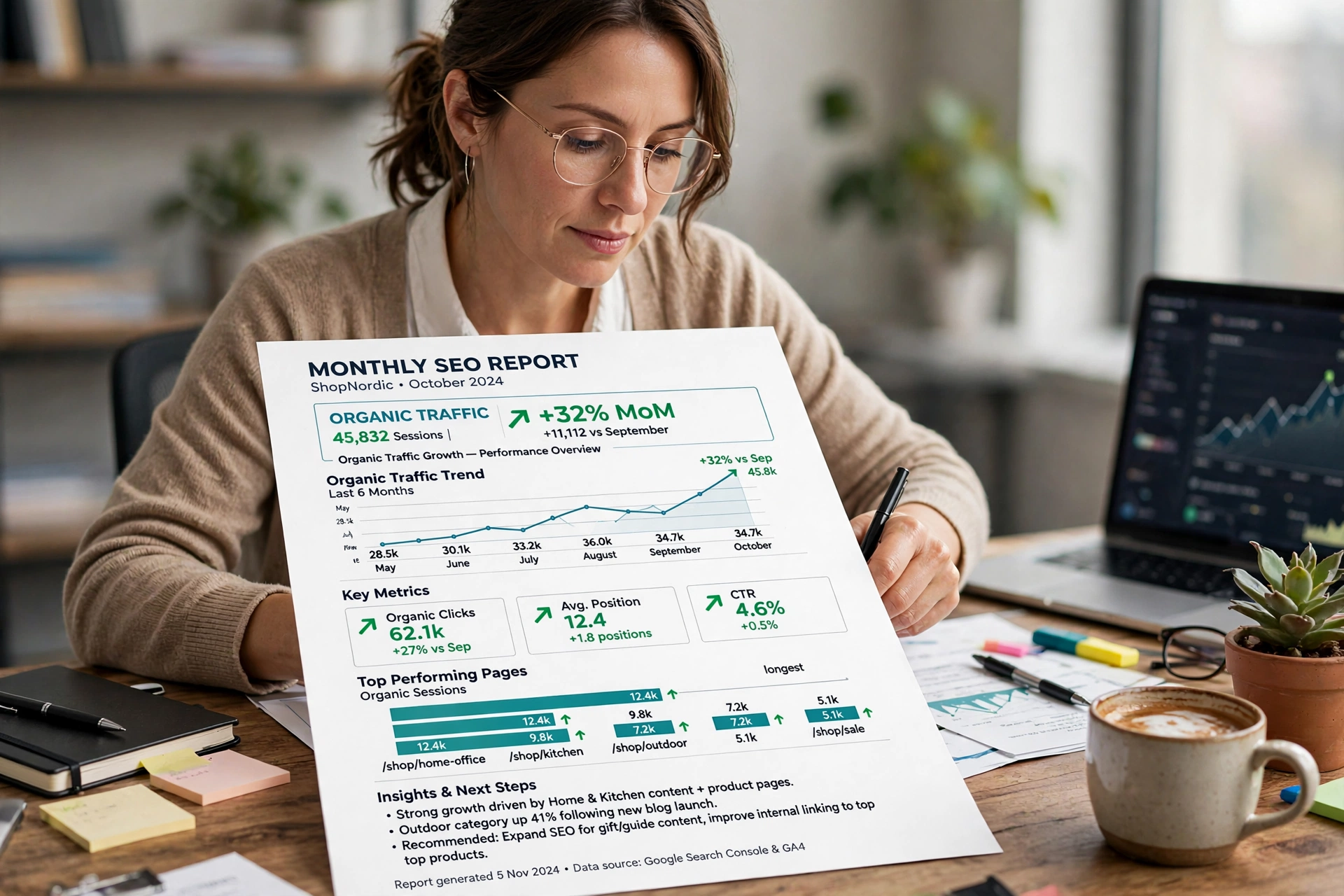
Expect clear monthly deliverables: what was fixed, published, and how rankings, clicks, and revenue changed.
Keyword Research for Ecommerce Stores
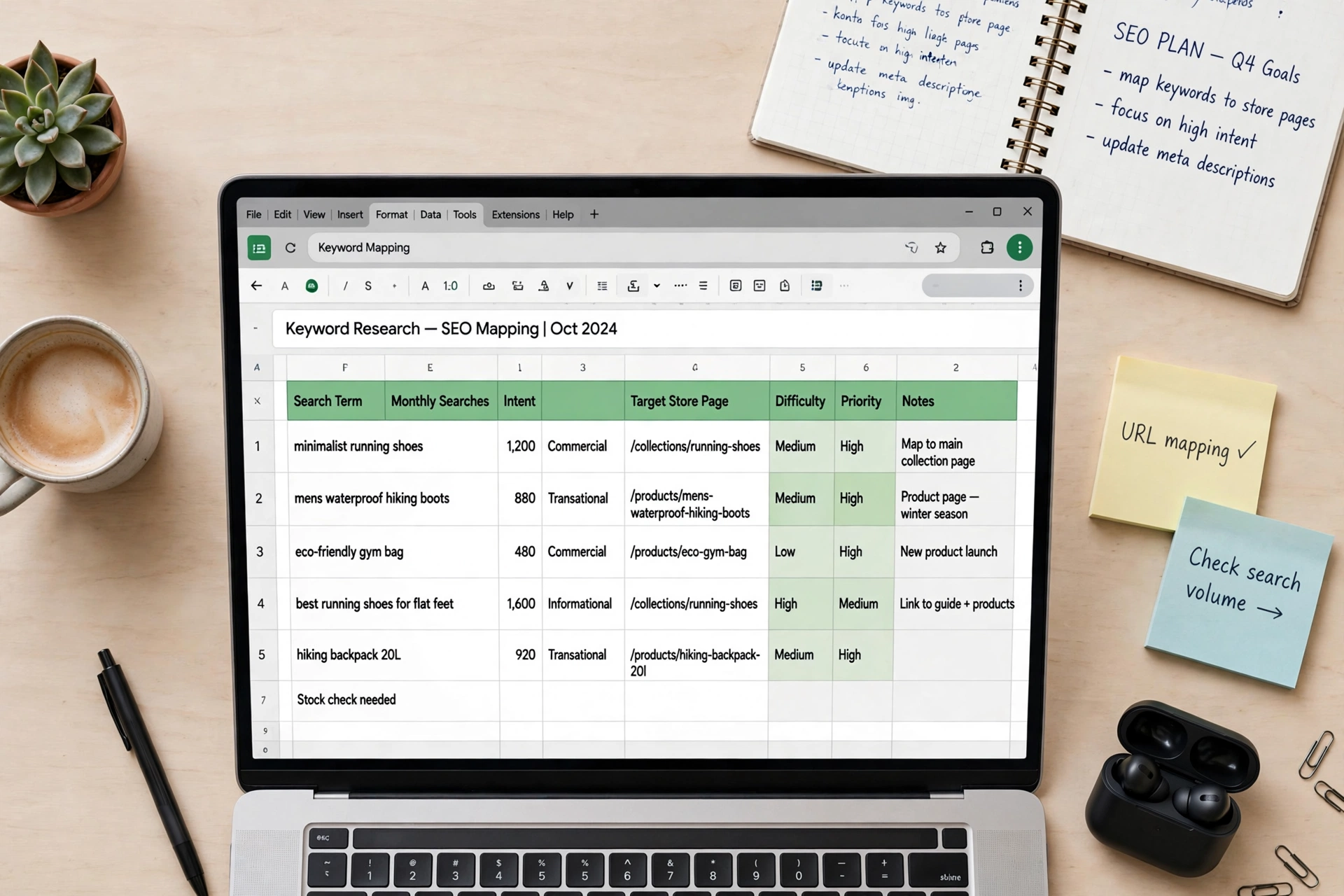
Keyword research finds the exact phrases shoppers use before they buy. A good provider groups keywords by intent, not just volume. Some searches mean research, while others mean ready to buy.
For ecommerce, three keyword types matter most. Category keywords target shoppers browsing a product type, such as running shoes. Product keywords target a specific item or model. Informational keywords target questions, guides, and comparisons that come before the purchase.
Providers start with your catalog and search data. They check which pages already get impressions, then find gaps where competitors rank and you do not. They also look for long-tail phrases a smaller store can win first.
Search volume alone can mislead. A keyword with 10,000 searches may bring browsers, while one with 500 searches may bring buyers. A good provider weighs intent, difficulty, and margin together.
They should also map each keyword to one page. When two pages target the same phrase, they compete with each other. A clear map keeps category, product, and guide pages in their own lanes.
On-Page SEO: Titles, Descriptions, and Product Pages
On-page SEO makes each page clear for shoppers and search engines. Each category and product page needs a unique title that includes the main keyword without stuffing.
Headings matter too. Your H1 should state the page topic once. H2s should break the page into sections such as features, sizing, materials, and shipping. Clean headings help shoppers scan and help Google understand the page.
Product pages need more than a short description copied from a supplier. Providers rewrite descriptions to answer real buyer questions, adding specs, care details, sizing, compatibility, and delivery information.
Internal links are part of on-page SEO as well. Links from guides to category pages pass authority to the pages that sell. Links from category pages to related products help shoppers find the right item faster.
Image optimization also counts. Providers compress images, add descriptive alt text, and use clear file names. This helps page speed and gives images a chance to rank in image search.
Technical SEO: Speed, Mobile, and Indexation
Technical SEO keeps your store fast, crawlable, and easy to index. If Google cannot crawl your pages, great content will not rank.
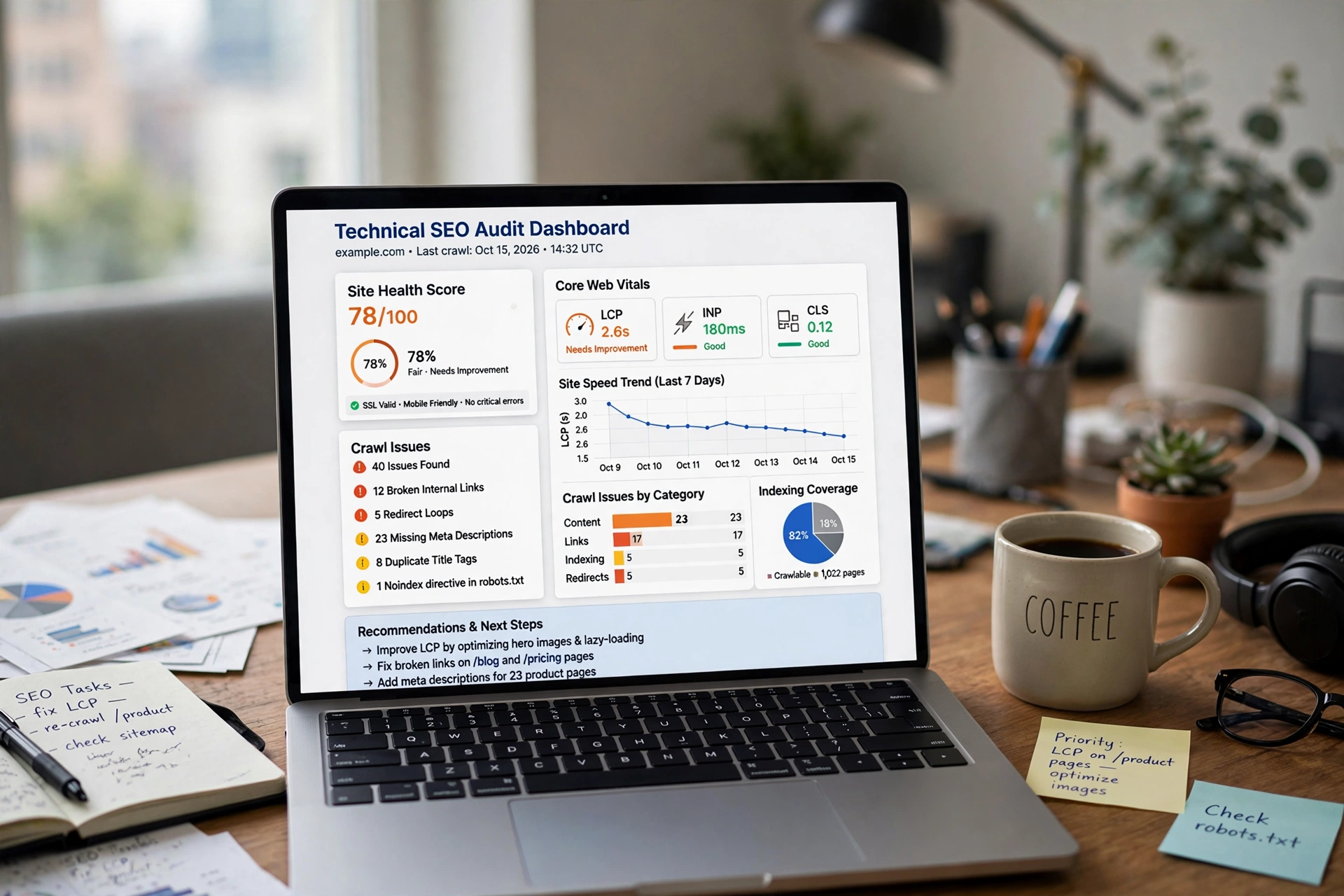
Site speed is a top priority. Providers check load times on mobile and desktop, then fix the biggest drags: image compression, cleaner code, and fewer heavy scripts. A slow product page loses shoppers before they see the offer.
Mobile usability is just as important. Most ecommerce traffic now comes from phones. Providers test menus, filters, checkout, and forms on small screens. If a button is hard to tap, sales suffer.
Crawl and index checks come next. Providers look for broken links, redirect chains, duplicate pages, and thin pages that waste crawl budget. They also check your sitemap and robots file to confirm the right pages are open to search engines.
Faceted navigation and filters create a common problem. Filter combinations can create hundreds of near-duplicate URLs. A good provider uses canonical tags and smart rules so Google indexes the main category pages, not every filter variant.
Structured data is another technical task. Product schema can help Google show price, availability, and ratings in results. For the official basics, see Google Search Central’s SEO starter guide, which covers crawling, indexing, and on-page best practice.
Content for Ecommerce SEO
Content brings in shoppers before they are ready to buy. It answers the questions they ask while comparing options. The best content is practical, not promotional.
Buying guides are a strong starting point. A guide that compares materials, sizes, or features helps a shopper choose with confidence. It should link to the relevant category pages without pushing a hard sell in every paragraph.
Category content also helps. A short, useful intro on a category page can target the main keyword and explain who the products suit. Long filler text above products hurts the shopping experience.
Comparison posts work well too. Shoppers often search for one product versus another, or for the best option for a specific need. A fair comparison that lists pros, cons, and who each option suits builds trust and earns clicks.
Providers should plan content around real searches. Each piece needs one main keyword, a clear audience, and a next step.
Content also needs upkeep. Prices and specs change, so a good provider updates top guides each quarter. Fresh, correct content keeps rankings longer than a one-time post.
Link Building for Ecommerce Stores
Link building earns trust from other sites. Quality matters far more than count: one link from a respected publication beats dozens of low-quality directory links.
Good providers earn links through useful content and outreach. They pitch guides, data, and expert quotes to publishers in your niche.
What to avoid matters too. Paid link schemes, private blog networks, and spammy guest-post farms can trigger penalties. If a provider promises hundreds of links in a week, treat that as a warning sign.
Internal linking supports external links. When a guide earns a link, internal links can pass some of that value to category and product pages. Expect transparency here: a real provider can show which links were earned and how, without hiding behind vague reports.
Local and International Ecommerce SEO
Not every store needs local or international SEO. A provider should tell you which applies before selling it.
Local SEO suits stores with a physical shop, showroom, or local delivery area. The work includes a complete Google Business Profile, consistent name and address details, and local pages for the areas you serve.
International SEO suits stores that sell across borders. The work includes hreflang tags, country and language targeting, and local pricing and shipping details. Shoppers leave when prices or delivery times are unclear, so each market page needs clear shipping, returns, and tax information.
If you sell only in one country, skip international work for now. Spend that budget on core SEO and content instead.
What Ecommerce SEO Services Typically Cost
Costs vary by store size, competition, and scope. Most small to mid-size stores pay a monthly retainer. One-time audits cost less, but they do not replace monthly work.
A typical range for ongoing ecommerce SEO is about $2,000 to $7,500 per month for a focused plan. Smaller stores may pay less. Larger catalogs, or highly competitive niches, often pay more.
A technical audit alone often costs $1,000 to $5,000, depending on site size. Content and link building are usually billed inside the retainer.
Beware of prices that look too good. A $300 monthly plan cannot cover real research, fixes, content, and outreach. It often means automated reports and little actual work. Good reports show rankings, organic clicks, organic revenue, and conversion rate.
If you are comparing full marketing plans, remember SEO is one channel. For a broader view of how SEO fits with paid ads, email, and social, see this guide to ecommerce marketing services. It explains how the channels work together.
How to Choose an Ecommerce SEO Provider
Choosing the right provider matters more than choosing the cheapest one. Start by checking their own work: do they rank for relevant terms, and do their case studies show traffic and revenue, not just vague claims?
Ask for a sample audit or plan. A good provider will explain what they would fix first and why, naming the pages, the issues, and the expected impact. Vague promises about reaching number one are a red flag.
Check their process for content and links. Do they write original content for your niche? Ask for examples of links they earned and how they earned them.
Communication matters too. You need monthly reports you can understand, plus a point of contact who answers questions. Also check how they work with your team: SEO touches product pages, developers, and content, and a provider who cannot explain changes to your developer will slow everything down.
For a wider checklist on vetting agencies, pricing models, and red flags, see how to choose an ecommerce marketing agency. Many of the same questions apply to SEO-only providers.
Ecommerce SEO Services at a Glance
| Service | What It Typically Includes | Best For | Typical Timeline to Results |
|---|---|---|---|
| Keyword research | Intent mapping, gap analysis, page mapping | Finding buyers, not just traffic | 2–4 weeks to plan |
| On-page SEO | Titles, descriptions, headings, product copy, internal links | Category and product rankings | 1–3 months |
| Technical SEO | Speed, mobile, crawl, indexation, schema | Fixing blocks that hold back rankings | 2–6 weeks for fixes |
| Content | Buying guides, comparisons, category content, updates | Early-stage shoppers and topical authority | 2–6 months |
| Link building | Outreach, digital PR, broken-link replacement | Authority in competitive niches | 3–6 months |
| Local / International | Business profile, hreflang, market pages | Local shops or cross-border sales | 1–3 months |
Frequently Asked Questions
What is included in ecommerce SEO services?
Ecommerce SEO services usually include keyword research, on-page fixes, technical SEO, content, and link building. Some plans also add local or international SEO.
How long do ecommerce SEO services take to show results?
Most stores see early movement in one to three months, with stronger gains in three to six months. Technical fixes can help faster, while content and links build more slowly.
How much do ecommerce SEO services cost?
A typical range for ongoing ecommerce SEO is about $2,000 to $7,500 per month for a focused plan. Audits alone often cost $1,000 to $5,000. Very cheap plans rarely cover real research, fixes, content, and outreach.
Can I do ecommerce SEO myself?
Yes, store owners can handle basics such as titles, product copy, and internal links. As your catalog grows, technical work, content, and outreach usually justify help. Start with the fixes closest to revenue.
How is ecommerce SEO different from regular SEO?
Ecommerce SEO focuses on category and product pages, filters, faceted URLs, and product schema. It also balances ranking with shopping experience.
Conclusion
Ecommerce SEO services cover the full path from search to sale. Keyword research finds buyers, on-page and technical work makes pages rankable, content brings in early shoppers, and links build trust.
You do not need every service on day one. Start with a clean technical base, strong category and product pages, and a few useful guides. Measure organic clicks and revenue, not just rankings.
If your files and photos are scattered, that slows content too. Keeping them organized with digital asset management software for ecommerce makes it easier to publish on time.
When traffic grows, reliable delivery still matters. Your order fulfillment software choice affects reviews and repeat orders as much as rankings do.

Muhammad Talha breaks down complex AI tools into simple, step-by-step guides for e-commerce entrepreneurs. His goal: to help you work smarter, not harder, by leveraging artificial intelligence
1 thought on “Ecommerce SEO Services: What They Include (2026)”