
Quick recommendation: After hands-on testing across 30+ Shopify stores, Tidio with Lyro AI is my pick for the best overall AI chatbot for most merchants. If budget is tight, Chatra is the best rule-based bot for simple FAQ deflection. For quiz funnels and zero-party data capture, Octane AI is the best marketing automation bot.
Your best customers don’t shop on your schedule. They ask about sizing at 11pm, panic about a delayed order on Sunday morning, and abandon carts at 2am.
I have watched support queues spike overnight at stores doing $10M+ a year, and the fix was rarely hiring more agents. Finding the best Shopify chatbot for your specific ticket mix matters more than picking the most popular app.
In this roundup I share what actually worked in my implementations: which bots deflect WISMO tickets, which recover carts, and which ones your team will quietly stop using after a month.
Why Every Store Needs the Best Shopify Chatbot in 2026
Let me be direct: the best Shopify chatbot is not a nice-to-have anymore. In my implementations, a well-configured bot deflects 30-40% of repetitive tickets within the first month.
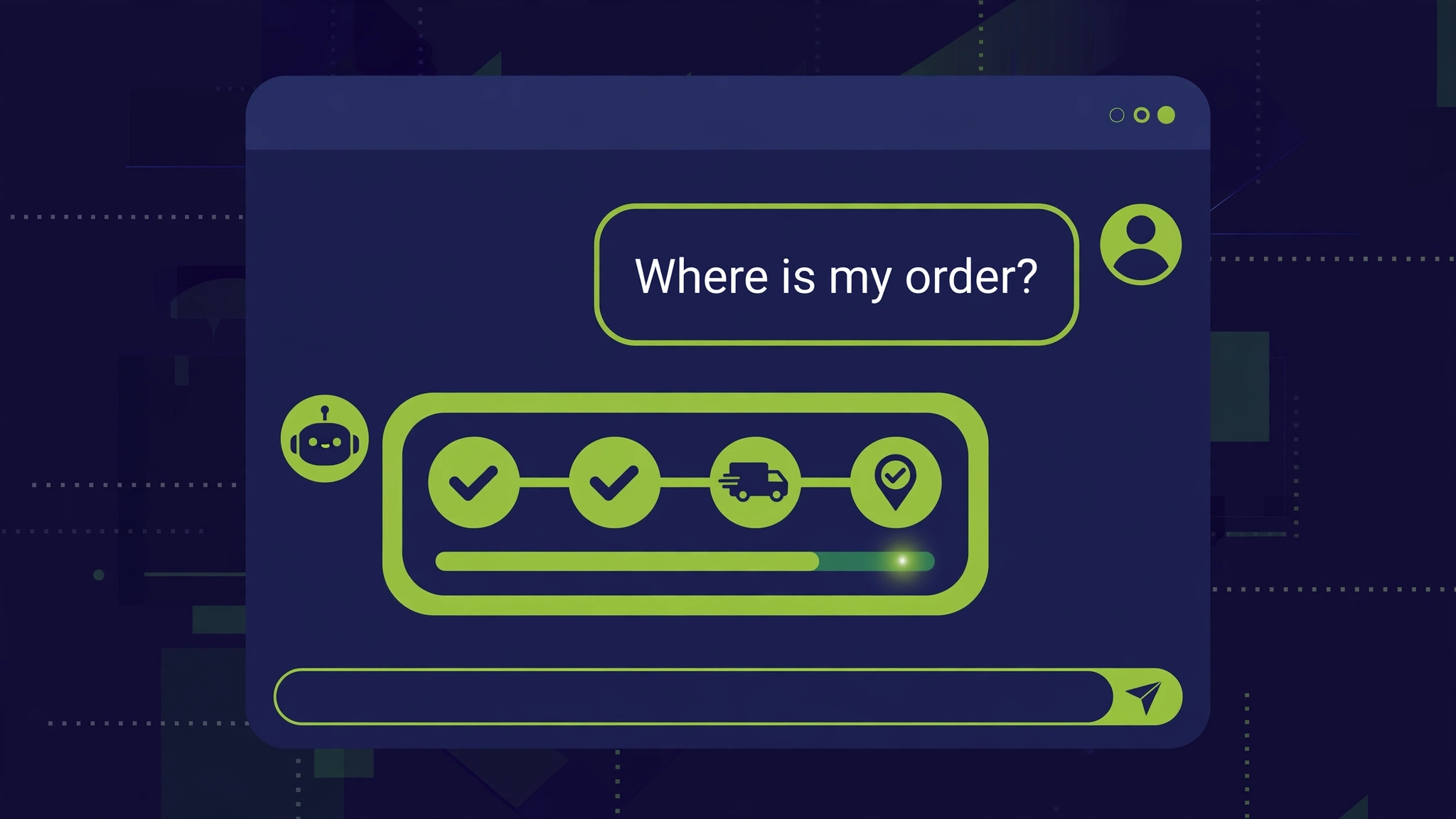
That is the difference between a support team that works strategically and one that drowns in “where is my order” all day. WISMO (where-is-my-order) questions make up 40-60% of tickets at most stores I work with.
A bot pulling live tracking data resolves these in seconds. The second win is revenue: proactive checkout chat plus timed follow-ups recovers carts that would otherwise die quietly.
The third win is agent bandwidth. Bots absorb the repetitive 70% so your agents handle edge cases and VIPs. Counterintuitively, CSAT usually rises when handover is designed well, because simple questions get instant answers.
Rule-Based vs. AI Chatbots: Which Is Right for You?
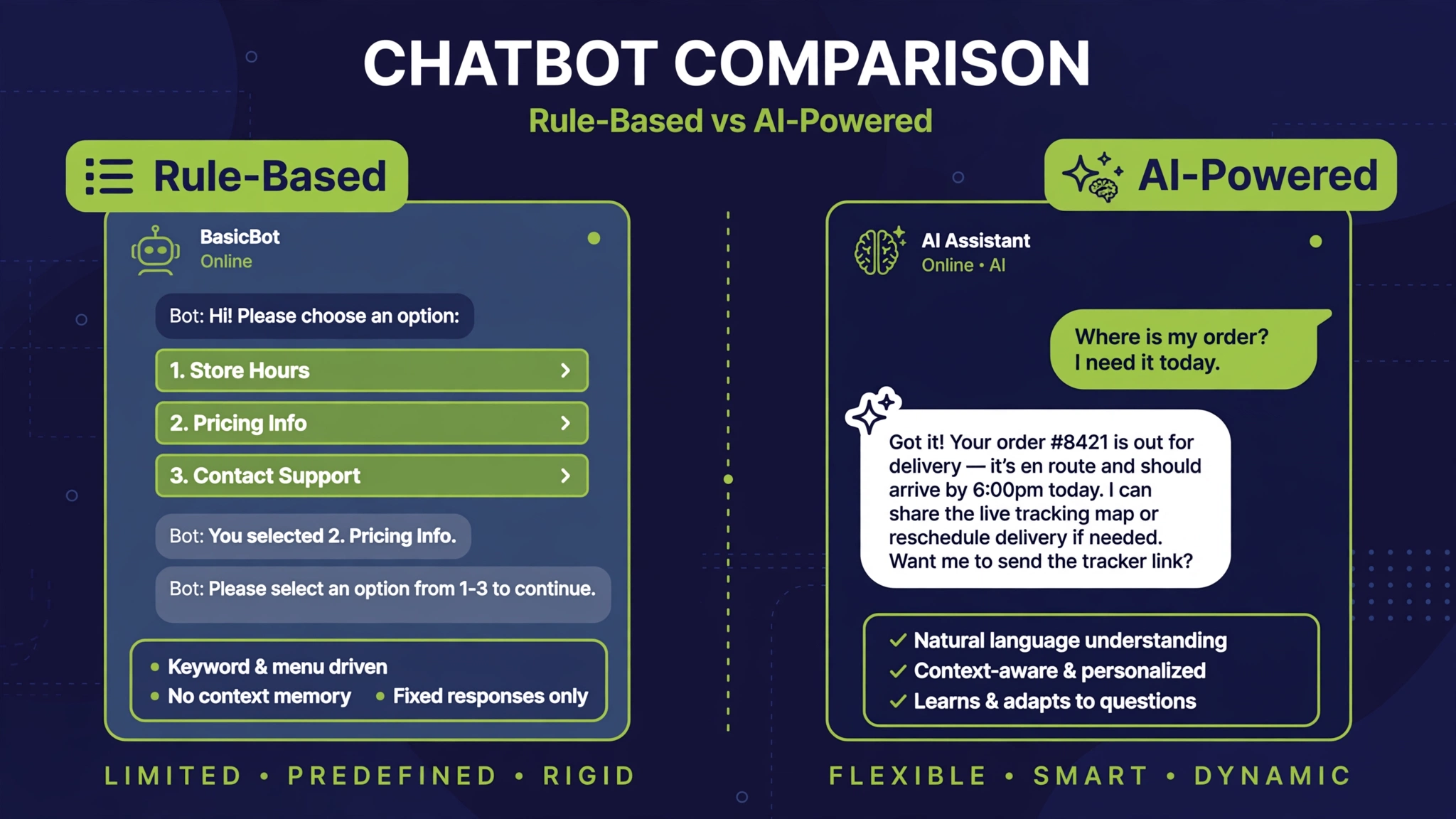
Rule-based bots run on decision trees. You script every path: if the customer clicks “track order,” the bot asks for an order number and returns a canned answer.
They are cheap, predictable, and fast to launch — but they break the moment a customer phrases something unexpectedly.
AI chatbots use NLP and intent recognition instead, understanding typos, synonyms, and multi-intent messages, with generative AI answering in natural language trained on your help docs.
The trade-off is guardrails. AI needs source grounding and confidence thresholds, or it will confidently invent a return policy you never had.
My rule of thumb: under ~200 tickets a month, rule-based is fine. Above that volume, AI pays for itself in deflected tickets within one quarter.
| Rule-Based | AI-Powered | |
|---|---|---|
| How it works | Scripted decision trees | NLP + trained on your content |
| Setup time | Hours | Days to weeks |
| Handles unexpected phrasing | Poorly | Well |
| Cost | Free to ~$25/mo | ~$29 to $300+/mo |
| Best for | New stores, simple catalogs | 100+ SKUs, high ticket volume |
Quick Comparison Table
| Chatbot | Key Focus | NLP Capability | Live Agent Handover | Key Integrations | My Rating |
|---|---|---|---|---|---|
| Tidio | Support + Sales | Generative AI (Lyro) | Yes | Shopify, email, Messenger, Instagram | 9.2/10 |
| Gorgias | Support desk | AI intent + suggested replies | Yes (full helpdesk) | Shopify, SMS, voice, 100+ apps | 8.7/10 |
| Octane AI | Marketing automation | Quiz logic + AI recs | Yes | Klaviyo, Shopify Flow, SMS | 8.7/10 |
| Intercom | Enterprise support | Advanced AI (Fin) | Yes | Shopify, Salesforce, custom API | 8.8/10 |
| Re:amaze | Support + live chat | Rule-based + AI assist | Yes | Shopify, social, VoIP | 8.4/10 |
| LiveChat | Live chat at scale | Rule-based + AI add-ons | Yes | 200+ incl. Shopify | 8.3/10 |
| Chatra | Live chat + FAQs | Rule-based | Yes | Shopify, Ecwid | 8.0/10 |
7 Best Shopify Chatbots Tested & Ranked
1. Tidio — Best Overall AI Chatbot
I installed Tidio on a fashion store doing ~$3M a year. Lyro AI trained on their help center and product pages in about twenty minutes.
Setup was simple: connect Shopify, import FAQs, set one handover rule — anything below 80% confidence goes to a human. Within two weeks, Lyro resolved 34% of chats untouched.
Key Features:
- Lyro generative AI trained on your store content
- 35+ pre-built templates for WISMO, discounts, and cart recovery
- Live chat + shared inbox with Shopify order data in the sidebar
- Product cards in chat so customers buy without leaving the conversation
- Multilingual support for international stores
Pros:
- Fastest setup of any AI bot I tested
- Generous free plan to start
- AI answers stay grounded in your content, not hallucinations
- Excellent mobile app for owners
Cons:
- Lyro AI is a paid add-on on top of the base plan
- Conversation-based pricing can spike during BFCM
- Advanced reporting locked behind higher tiers
Pricing: Free plan covers 50 handled conversations a month. Paid plans start around $29/mo, with Lyro AI billed per resolved conversation.
2. Gorgias — Best for Support-Heavy Stores
I migrated a beauty brand from Zendesk to Gorgias last year. Gorgias is not just a chatbot — it is a full helpdesk with AI woven through it.
Intent detection auto-tags WISMO and refund tickets while AI suggests one-click macro replies. First-response time dropped from 6 hours to 11 minutes.
Key Features:
- AI Agent that resolves tickets autonomously end-to-end
- 100+ integrations including SMS, voice, and social channels
- Shopify data in the sidebar — edit orders and issue refunds without leaving the ticket
- Revenue attribution per ticket and per agent
- One-click macros for the 20 questions you answer daily
Pros:
- Deepest Shopify integration I have seen
- True omnichannel: email, chat, SMS, voice, social in one inbox
- Ideal for teams of 3+ agents
- AI Agent handles full resolutions, not just deflection
Cons:
- Pricing scales with ticket volume, so growth gets expensive
- Overkill if you handle under 100 tickets a month
- Automation rules have a real learning curve
Pricing: Starts around $10/mo for 300 tickets a month and scales with volume. AI Agent usage is billed separately.
3. Octane AI — Best for Marketing Automation
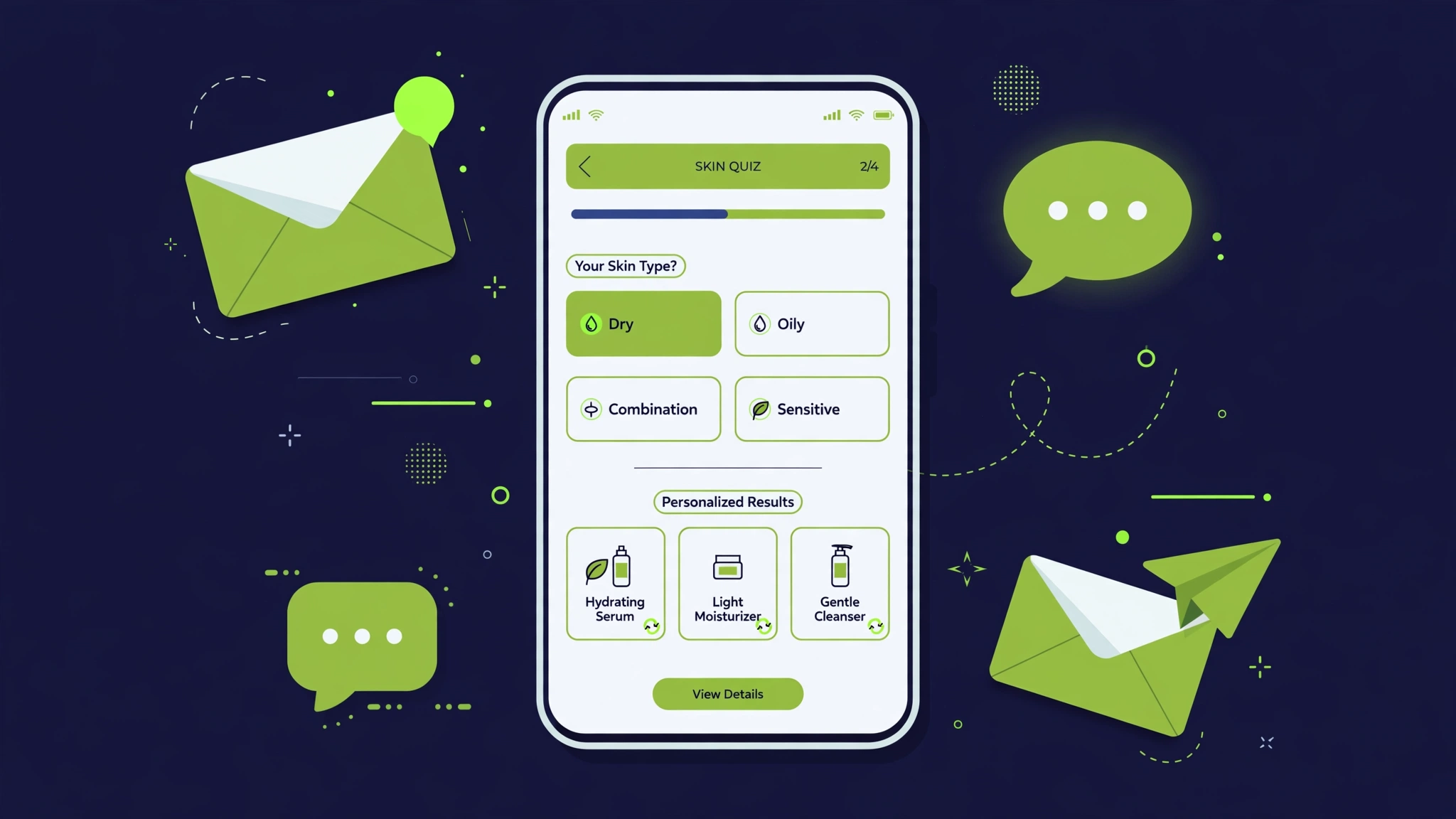
I deployed an Octane AI quiz funnel on a skincare store. The “find your routine” quiz recommended personalized products and synced answers to Klaviyo.
Quiz completion hit 62%, with 38% of starters joining the email list. Setup was drag-and-drop with no code needed.
Key Features:
- Shoppable quizzes with personalized product recommendations
- Zero-party data collection straight into Klaviyo
- Post-quiz SMS and email flows triggered by answers
- A/B testing for quiz questions and results pages
- Shopify Flow integration for advanced automation
Pros:
- Highest revenue-per-visitor lift of any bot I tested
- Klaviyo integration is genuinely excellent
- Non-technical teams can launch in a day
Cons:
- It is not a support bot — pair it with one
- Starts at $50/mo, steep for brand-new stores
- Quizzes lose impact if you overuse them across the site
Pricing: Plans start around $50/mo, with higher tiers based on engagement volume.
4. Intercom — Best for Enterprise and High Complexity
I implemented Intercom‘s Fin AI for a multi-region store with a 200-article help center. Fin resolved 41% of conversations autonomously — the highest resolution rate I have measured.
Setup was heavier — two to three weeks of training and tuning — but nothing else I tested came close on accuracy at high volumes.
Key Features:
- Fin AI agent with best-in-class resolution rates
- Workflows engine for complex multi-step automation
- Outbound messaging for proactive support and onboarding
- 450+ integrations plus a robust custom API
- Advanced analytics on containment, CSAT, and deflection
Pros:
- Most powerful AI resolution I have measured
- Scales comfortably to huge ticket volumes
- Analytics actually answer “is this working?”
Cons:
- Expensive, and costs grow with seats plus AI resolutions
- Implementation genuinely needs expertise
- Overkill for stores under ~$5M in revenue
Pricing: Starts around $39/mo per seat, with Fin AI billed per resolution on top.
5. Re:amaze — Best All-Rounder for Small Teams
I ran Re:amaze for a home-goods store with two support agents. Chat, email, and Instagram DMs landed in one shared inbox.
Canned responses plus simple automation deflected about 25% of tickets, and setup took one afternoon.
Key Features:
- Shared inbox for chat, email, SMS, and social
- Proactive chat triggers based on cart value and time on page
- FAQ automation with a no-code bot builder
- VoIP add-on for stores that still take calls
- Solid reporting without the enterprise complexity
Pros:
- Affordable per-seat pricing for small teams
- Easy enough for non-technical owners
- Reliable uptime across every store I tested it on
Cons:
- AI capabilities are lighter than Tidio or Gorgias
- Chatbot builder is rule-based, not generative
- Fewer advanced flows for power users
Pricing: Starts around $29/mo, with FAQ automation on higher plans.
6. LiveChat — Best Live Agent Handover
I used LiveChat at a furniture store with high average order values. When the bot hit its limit, handover was seamless — the agent saw the full transcript plus live cart contents, which is worth real money on considered purchases.
Key Features:
- 200+ integrations including a strong Shopify app
- Smart chat routing by skill, language, and cart value
- Agent productivity reports that show who resolves what
- AI assist add-ons for reply suggestions and summaries
- Built-in ticketing for follow-ups after chat ends
Pros:
- Best-in-class tooling for human agents
- Reliable at serious scale
- Cart and customer context on every handover
Cons:
- Real chatbot features cost extra as a separate add-on
- Per-agent pricing adds up fast with bigger teams
- AI features lag behind Tidio and Intercom
Pricing: Starts around $20/mo per agent, with the chatbot add-on billed separately.
7. Chatra — Best Budget Rule-Based Bot
I put Chatra on a new dropshipping store that could not justify paid software yet. The free plan handled live chat and basic auto-replies.
Setup took fifteen minutes, and for under 100 chats a month it did the job: greet visitors, answer FAQs, collect emails offline.
Key Features:
- Genuinely useful free plan with live chat included
- Lightweight widget that does not slow down the store
- Typing insights so agents see what visitors type in real time
- Group chats for team collaboration
- Simple triggers for proactive messages
Pros:
- Free plan is enough to validate whether chat helps your store
- Fast, clean interface with no bloat
- Very light performance footprint
Cons:
- Rule-based only — no real NLP or generative AI
- Limited integrations compared to the rest of this list
- Not built to scale past a few hundred chats a month
Pricing: Free plan available. Paid plans start around $21/mo.
3 Crucial Mistakes to Avoid When Setting Up Your Chatbot
1. Letting the Bot Guess Instead of Escalating
The most expensive failure I see is a bot with no handover threshold. It answers a refund question wrong, the customer gets angry, and your team spends longer fixing it than answering directly would have taken.
Set a confidence threshold — I use 80% — and route everything below it to a human, always showing a visible “talk to a human” option. A bot that knows when to quit earns more trust.
2. Training Only on Your FAQ Page
Bots fail on policy edge cases: partial refunds, split shipments, address changes after fulfillment. Your FAQ page does not cover these, but your ticket history does.
Feed the bot real ticket transcripts, not just polished help articles — I review the first 200 bot conversations manually on every implementation to catch the gaps FAQs never mention.
3. Launching Without Measuring Anything
If you cannot measure containment rate, CSAT on bot-handled chats, and recovered revenue, you cannot tune the bot. Most merchants install a chatbot and never look at the data again.
Track those three metrics weekly for the first 60 days. Every bot on this list improves dramatically once you feed its weak spots back into training.
Frequently Asked Questions
Do Shopify chatbots actually reduce support tickets? Yes. In my implementations, well-trained bots deflect 25-40% of repetitive tickets — mostly WISMO and policy FAQs — within 30 to 60 days. The key is grounding answers in live order data, not static FAQ text.
Can a chatbot recover abandoned carts? Yes. Proactive checkout chat plus timed follow-ups recovered 5-12% of abandoned carts in my tests. Pair the bot with email or SMS flows for the highest recovery rate.
Will an AI chatbot damage my brand voice? Only if you skip training. Feed it your tone guidelines and real conversation transcripts, set escalation rules, and manually review the first 200 bot conversations before trusting it fully.
How much does a Shopify chatbot cost? Free to ~$29/mo covers most small stores with Chatra or Tidio’s starter plan. Expect $50-360/mo as ticket volume and AI usage grow, with enterprise setups like Intercom running higher.
Final Verdict: Which Best Shopify Chatbot Should You Choose?
Match the bot to your stage, not to the hype.
Just starting out or on a tight budget? Start with Chatra free, then move to Tidio’s starter plan when chat volume justifies it. You will learn what your customers actually ask before spending real money.
Growing store drowning in tickets? Tidio with Lyro AI is the best Shopify chatbot for most merchants in 2026. It deflects the repetitive work fast and the setup does not require a developer.
Support team of 3+ handling omnichannel volume? Gorgias. The helpdesk depth and Shopify integration pay for themselves when agents live in the tool all day.
Want revenue lift, not just ticket deflection? Add an Octane AI quiz for zero-party data and personalization, paired with one of the support bots above.
Enterprise complexity or multi-region scale? Intercom. It costs more and needs expertise, but Fin’s resolution rates justify it at volume.
One last piece of advice from eight years of implementations: start with one job — deflecting WISMO tickets. Measure for 30 days, then expand based on data, not enthusiasm.
Keep building your AI stack: I also tested Free AI Background Remover for Shopify Product Photos: 5 Tools I Tested and 10 Best AI Product Description Generator (2026 Tested).

Muhammad Talha breaks down complex AI tools into simple, step-by-step guides for e-commerce entrepreneurs. His goal: to help you work smarter, not harder, by leveraging artificial intelligence
1 thought on “The 7 Best Shopify Chatbot Apps I Tested for Support, Sales & Recovery (2026)”