

You want your customers to stay happy and loyal in 2025. The best customer retention strategies help you build strong relationships. You should listen to your audience. Try talking with people on social media. Answer questions fast. Give rewards for loyalty. Learn from feedback. Even a small increase in retention can raise profits by up to 95%. Look at the numbers below to see why this is important:
| Statistic | Impact |
|---|---|
| A 5% Increase in Retention Can Boost Profits by 25-95% | Even small improvements can lead to big gains. |
| Acquiring New Customers Costs 5-25x More Than Retention | Keeping customers is much cheaper than finding new ones. |
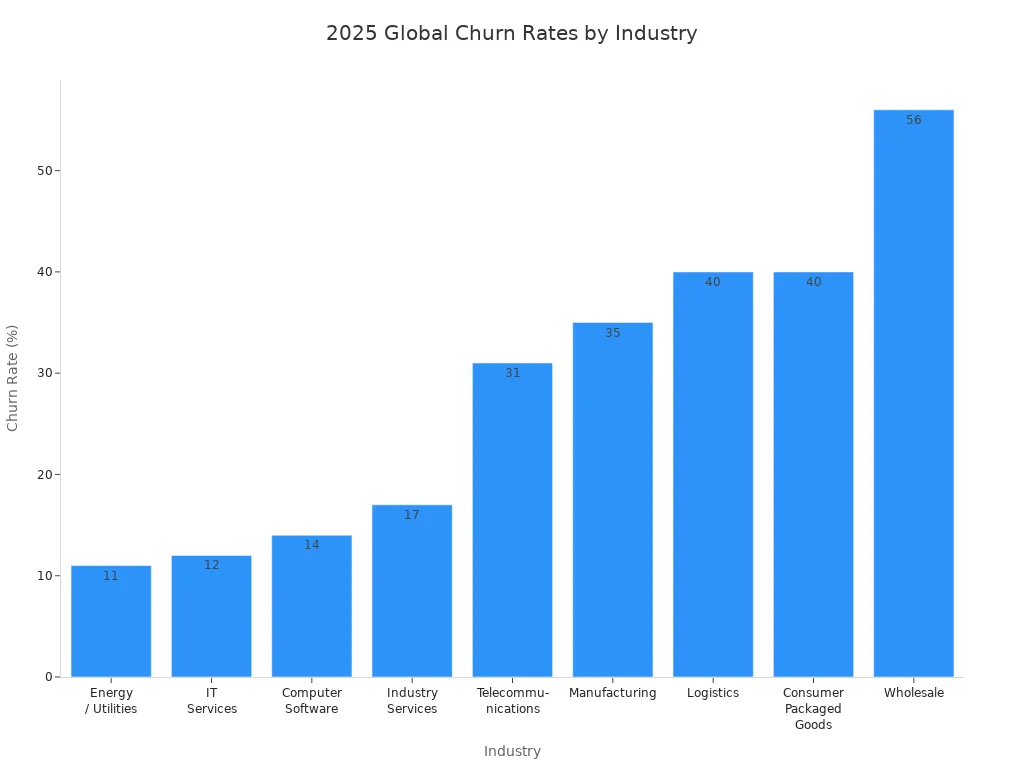
Many industries lose over 30% of their customers. Think about how you talk to your customers. See where you can do better.
Customer Retention Overview
What Is Customer Retention
You may ask what customer retention means. It is about making sure customers come back to your business. You want them to choose you instead of someone else. When you work on customer retention, you check how many people stay with you. This shows if your customers are happy and if they buy again. It also tells you if they feel close to your brand.
- Customer retention tells you how well you keep customers.
- It helps you find loyal fans who enjoy your products.
- You can use it to guess if people will buy again or tell friends about you.
Why It Matters
Customer retention is more important than you might think. When customers are happy, they buy from you many times. This helps your business make more money and get stronger. Here is why you should care:
- If you keep 5% more customers, your profits can go up by 25% to 95%.
- Loyal customers buy more things and spend more money.
- Keeping customers helps your business grow, even when things change.
- Customers who stay longer give better feedback and help you improve.
Tip: The longer a customer stays, the more valuable they are. This helps you plan your money and grow your business.
Here is a quick look at the benefits:
| Benefit | Description |
|---|---|
| Increased Profits | More loyal customers mean you make more money. |
| Customer Lifetime Value | Customers who stay longer spend more over time. |
| Advocacy | Happy customers tell others about your business. |
| Feedback | Loyal customers share ideas to help you get better. |
| Cross-selling | Existing customers are open to trying new products from you. |
2025 Trends
Customer retention is changing quickly in 2025. Companies now care more about keeping customers than just getting new ones. More businesses use AI to learn what customers want and make things personal. Many companies now see customer retention as the key to doing well for a long time.
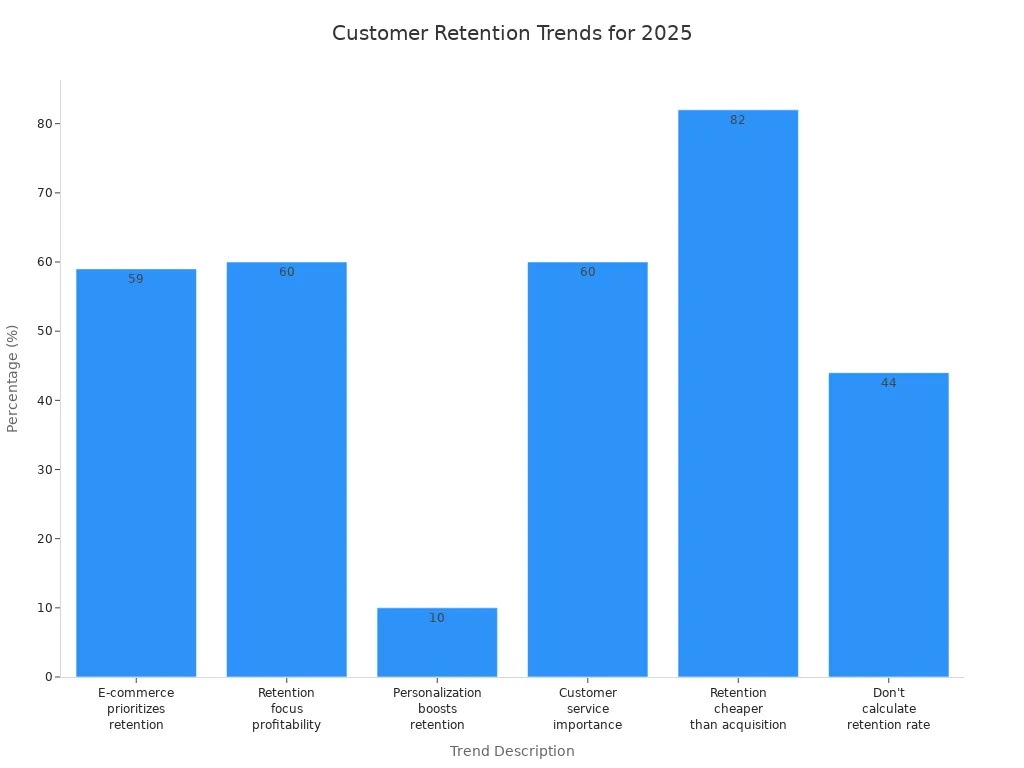
Here are some trends you should know:
- Making more money is now a top goal for most businesses.
- AI tools help companies know and serve customers better.
- Old ways to measure retention are changing as businesses try new ideas.
- Personal loyalty programs can help keep customers by 10% more.
- More companies see that good customer service keeps people loyal.
If you want to do well, watch these trends and change your customer retention strategies often.
Related Article
Top Customer Retention Strategies

Personalization
You want customers to feel important. Personalization means treating each person as unique. You can use their name in emails. Suggest products they might like. Send offers that match their interests. This makes people feel noticed and special.
Here’s how personalization helps:
| Company | Evidence |
|---|---|
| Sephora | Personalized emails got opened 50% more, making customers happier. |
| Starbucks | Their rewards program gives offers based on what you buy, so people come back more. |
| General | 91% of people like brands that give good recommendations. |
| General | 66% of customers want companies to know what they need. |
| General | 80% of shoppers will buy from brands with personal experiences. |
Birchbox asks about your beauty routine and style. Then they send you products and tips that fit your answers. This makes you feel understood by the brand.
Tip: Start simple. Use names in emails or suggest products based on what someone bought before.
Onboarding
Onboarding is how you welcome new customers and help them begin. If you make this easy, people stay longer. Show them how to use your product. Answer their questions. Celebrate when they do something right.
| Onboarding Practice | Description |
|---|---|
| Progressive Information Disclosure | Unlocks features as users finish tasks, so they stay interested. |
| Continuous Onboarding | Changes to fit user needs, so it always feels helpful. |
| UX Audit-Driven Product Roadmaps | Checks for problems and fixes them, so people are happier. |
| Anticipatory Design in Flows | Guesses what users want next and helps them, so they don’t get confused. |
| UX for Cancellation | Offers help or choices when users want to leave, so fewer people quit. |
Canva unlocks new features as you learn, so you don’t get lost. HubSpot changes onboarding for people who come back, so it stays interesting. Slack asks you to invite friends, so you get more out of it right away.
Note: Keep onboarding easy and friendly. Celebrate small wins to help customers feel good.
Loyalty Programs
Loyalty programs give rewards to customers who return. You can give points, discounts, or special treats. These programs make people want to stay and buy more.
Key features of good loyalty programs in 2025:
| Feature | Description |
|---|---|
| Personalization | Give rewards that fit each customer’s likes. |
| Omnichannel Experience | Let people earn and use points online and in stores. |
| Gamification | Add fun games or challenges to keep people interested. |
| Community Engagement | Connect rewards to causes or group activities. |
| Data-Driven Insights | Use data to make rewards better and more useful. |
- Loyalty programs help people buy again and spend more.
- They help you find ways to sell more to the same people.
- Personal rewards make customers feel special and loyal.
Tip: Use your loyalty program to thank customers. Give rewards that matter to them.
Customer Support
Good customer support keeps people coming back. When you answer fast and fix problems, customers trust you. If you ignore them or take too long, they might leave.
| Evidence Description | Impact on Customer Retention Metrics |
|---|---|
| Fast customer service can stop refunds and keep money. | Quick answers can keep customers happy and stop frustration. |
| Saying you got their question can make customers feel better. | Keeps people happy while you fix things, so they stay. |
| Slow answers can make more work for support teams. | Makes people upset and more likely to leave. |
| 61% of customers would leave after one bad experience. | Shows how important good service is for keeping customers. |
| Returning customers spend 67% more than new ones. | Customers who stay are worth more, so support is important. |
- Answer quickly.
- Always let customers know you got their question.
- Train your team to be nice and helpful.
Remember: One bad experience can make a customer leave forever.
Omnichannel Support
Omnichannel support means helping customers on email, chat, phone, or social media. People want to switch between these without repeating themselves. You need to make this simple.
| Best Practice | Description |
|---|---|
| Leverage Automation | Use technology to answer easy questions fast. |
| Train Staff on Omnichannel Best Practices | Teach your team to give great service everywhere. |
| Continuously Evaluate and Adapt | Check your process often and make it better with feedback. |
- 73% of customers use more than one way to get help.
- Make sure your support feels the same everywhere.
Tip: Use automation for quick answers, but always have a real person for hard questions.
Proactive Communication
Don’t wait for customers to contact you. You should reach out first. Proactive communication shows you care and helps you fix problems early.
- Send updates, tips, or check-ins.
- Ask for feedback before there are problems.
- Use surveys to learn what customers want.
When you talk to customers before they complain, you build trust. Regular contact helps you find problems early and keeps people happy.
Note: Reaching out first can stop customers from leaving.
Feedback Loops
Feedback loops mean you ask for opinions and use them to improve. When customers see you listen, they feel important.
| Evidence | Explanation |
|---|---|
| Feedback loops help you keep up with what customers want | Shows you care, so people are happier and stay. |
| Getting and using feedback | Helps you fix problems and meet new needs. |
| Being open about changes | Using feedback builds trust and loyalty. |
- Send surveys after someone buys.
- Ask for reviews and ideas.
- Tell customers what you changed because of their feedback.
Tip: Let customers know their feedback made a difference.
Related Article
Churn Detection
Churn detection helps you see when customers might leave. You can use technology to watch for warning signs, like less activity or bad feedback.
| Technology | Description |
|---|---|
| AI | Looks at what customers do and feel to guess if they might leave. |
| LSTM Models | Watches how people act to find early signs of leaving. |
| Whatfix | Finds risky actions by looking at how people use your product. |
- Set up alerts for risky behavior.
- Contact customers who might leave with special offers or help.
- Use data to learn why people leave.
Note: Acting early can keep a customer from leaving.
Community Building
People want to feel like they belong. Building a community around your brand helps customers connect with you and each other. This makes them more loyal.
- Make online groups or forums.
- Host events or workshops.
- Ask customers to share stories and tips.
“People don’t buy what you do; they buy why you do it.”
A strong community gives customers a reason to stay, even if another company offers something new.
Value-Added Content
Give your customers more than just products. Value-added content helps them learn, solve problems, and get more from what you offer.
- Share blog posts and how-to guides.
- Send emails with tips just for them.
- Host workshops or Q&A sessions.
As I Am helps customers with blogs, glossaries, and YouTube videos, so everyone finds answers and feels supported.
YNAB gives free budgeting classes, blogs, and podcasts to help users do well.
Tip: Good content keeps customers interested and coming back.
Shared Values
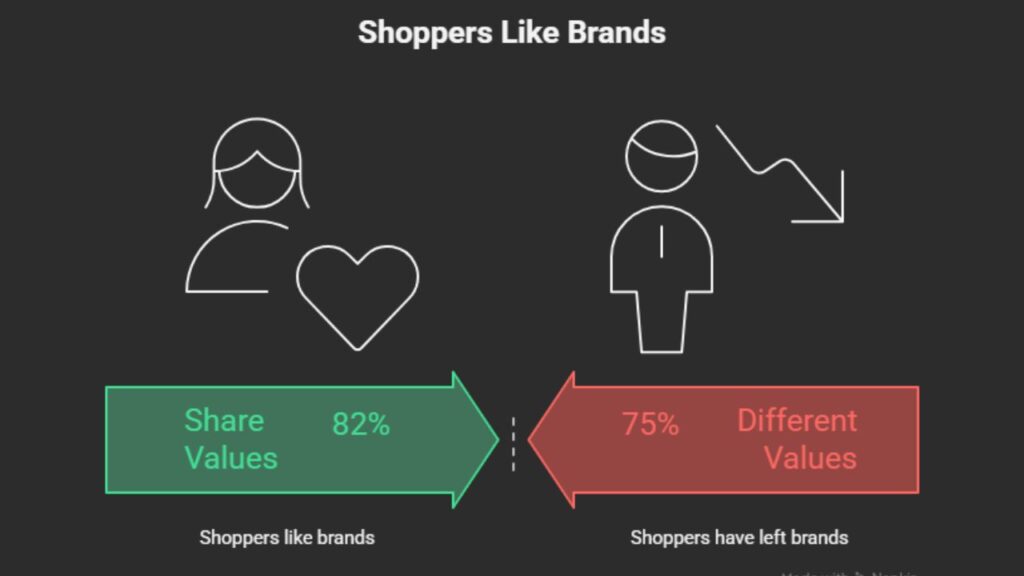
Customers want to support brands that believe what they believe. When your values match theirs, they feel close and loyal.
| Statistic | Description |
|---|---|
| 82% | Shoppers like brands that share their values. |
| 75% | Shoppers have left brands because of different values. |
| 45% | Marketers plan to spend more on content about brand values. |
- Show what you care about.
- Support causes your customers like.
- Be honest and open.
Note: Shared values turn customers into fans who stay.
Relationship Building
Building strong relationships takes time, but it works. When you connect with customers, they trust you and want to stay.
- Welcome new users with a friendly message.
- Suggest things they might like, like Netflix does.
- Stay in touch with newsletters and social media.
- Give points or perks for being loyal.
- Offer help before customers ask.
Salesforce and HubSpot keep customers by checking in and offering help. Gainsight lowered churn by 30% with proactive customer success. Adobe made 23% more money by giving personal help.
Tip: Make every customer feel important. Small things can build big loyalty.
You can use these customer retention strategies to keep your customers happy and reduce churn in 2025. Try a few, see what works, and keep improving. Your business will grow stronger with every loyal customer.
Retention Metrics

Key Metrics
You need to know if your retention strategies work well. Tracking the right metrics helps you see what is good and what needs work. Here are the most important metrics for customer retention in 2025:
| Metric | What It Means | Why It Matters | How You Measure It |
|---|---|---|---|
| Net Promoter Score (NPS) | Shows how likely customers are to recommend you | Predicts loyalty and growth | % of Promoters – % of Detractors |
| Customer Churn Rate | Tells you how many customers leave | Reveals retention effectiveness | (Customers lost ÷ Total customers at start) × 100 |
| Customer Lifetime Value (CLV) | Estimates total revenue from each customer | Helps you focus resources wisely | Average Purchase × Frequency × Lifespan |
| Customer Effort Score (CES) | Measures how easy it is for customers to get help | Lower effort means higher loyalty | Average score from “How easy was it?” (1-7 scale) |
| Customer Sentiment | Analyzes feelings in feedback | Gives deeper insight into motivations | Use sentiment analysis tools |
| Customer Referral Rate | Tracks how often customers refer others | Shows satisfaction and loyalty | (Number of referrals ÷ Total customers) × 100 |
| Net Revenue Retention (NRR) | Shows recurring revenue kept from existing customers | Critical for understanding revenue growth | (Start MRR + Expansion MRR – Churned MRR) / Start MRR x 100 |
| Customer Satisfaction Score (CSAT) | Measures satisfaction with your product or service | Directly links to retention and loyalty | Average score from surveys |
| Average Order Value (AOV) | Finds average revenue per order | Helps you see buying habits | Total revenue ÷ Number of orders |
Tip: Check these metrics every month. You will find problems early and celebrate wins sooner.
Related Article
Tools
You need the right tools to measure and understand these metrics. Many platforms help you track customer retention and spot churn risks.
- Usermaven: Uses AI to look at customer behavior and predict churn. You get privacy-focused insights and cohort analysis.
- ProfitWell: Shows detailed metrics for lifetime value and recurring revenue. It is great for subscription businesses.
- Mixpanel: Tracks how customers use your product. You see engagement and conversion rates in real time.
- KissMetrics: Gives deep analytics on customer actions. You can change your marketing and improve retention.
- Customer Retention Software: Finds patterns and gives ideas to keep customers happy. You can act before problems get bigger.
Note: Pick tools that fit your business size and goals. Start simple, then add more features as you grow.
You can use these metrics and tools to keep your retention strategy on track. When you measure what matters, you make smarter choices and keep more customers.
You can make your business stronger in 2025 by focusing on customer retention. Using several strategies helps you lower churn, build loyalty, and boost growth. When you keep customers happy, they spend more and tell others about you.
- Review your retention plan often and update it as you learn more.
- Set clear goals, start with one or two new tactics, and listen to feedback.
- Build trust and keep showing value—your loyal customers will help your business grow.
FAQ
What is customer churn?
Customer churn means people stop buying from you or cancel their service. You want to keep this number low. If churn goes up, you lose money and growth slows down.
How can I tell if my retention strategy works?
You can check your retention metrics every month. Look at churn rate, Net Promoter Score, and customer feedback. If these numbers improve, your strategy works.
What is the best way to keep customers loyal?
You should make customers feel special. Use their name, send helpful tips, and reward them for coming back. People stay loyal when they feel valued.
How often should I ask for customer feedback?
Ask for feedback after every big interaction, like a purchase or support call. You can also send short surveys every few months. This helps you spot problems early.
Do loyalty programs really help reduce churn?
Yes! Loyalty programs give people reasons to return. You can offer points, discounts, or special perks. Customers love rewards and will choose you over others.

Muhammad Talha breaks down complex AI tools into simple, step-by-step guides for e-commerce entrepreneurs. His goal: to help you work smarter, not harder, by leveraging artificial intelligence